Free Tool
AI ROI Calculator
See how much your business could save with AI automation. Adjust the sliders and get your estimate in 60 seconds.
What's your team's average cost per hour? (salary + benefits / 2,080)
Email, data entry, reporting, scheduling, invoicing...
Your Estimated ROI
Get implementation costs, process-by-process savings, industry benchmarks, and next steps.
How to Calculate Your AI ROI (And Why Most Businesses Get It Wrong)
Most business owners hear “AI” and immediately think about six-figure software projects and hiring a team of engineers. That mental picture is wrong. The reality for small and midsize businesses is much simpler, much cheaper, and much faster to pay off than almost anyone expects.
The calculation itself is straightforward. Take the number of hours your team spends each week on repetitive, rule-based tasks. Multiply by your average loaded hourly rate. Multiply by 50 working weeks. That is your annual cost of manual work. Now multiply that number by 0.6. That is a realistic estimate of what AI can save you.
Why 60% and not 100%? Because not every task can be fully automated. Some steps need a human review. Some edge cases require judgment. The 60% automation rate is the benchmark that shows up consistently across industry studies. It accounts for the tasks that AI handles start to finish and the ones where AI does 80% of the work and a person handles the rest.
Where most businesses get the math wrong is on the cost side. They assume implementation will be expensive and slow. In practice, automating a single process (like email triage, invoice processing, or appointment scheduling) typically costs between $5,000 and $15,000 and takes two to four weeks to go live. Compare that to the $30,000 to $80,000 per year you are currently spending on manual labor for that same process. The payback period is measured in weeks, not years.

What Small Businesses Actually Save with AI
The savings depend on what kind of business you run and where your team spends the most time. Here is what the data shows across different industries.
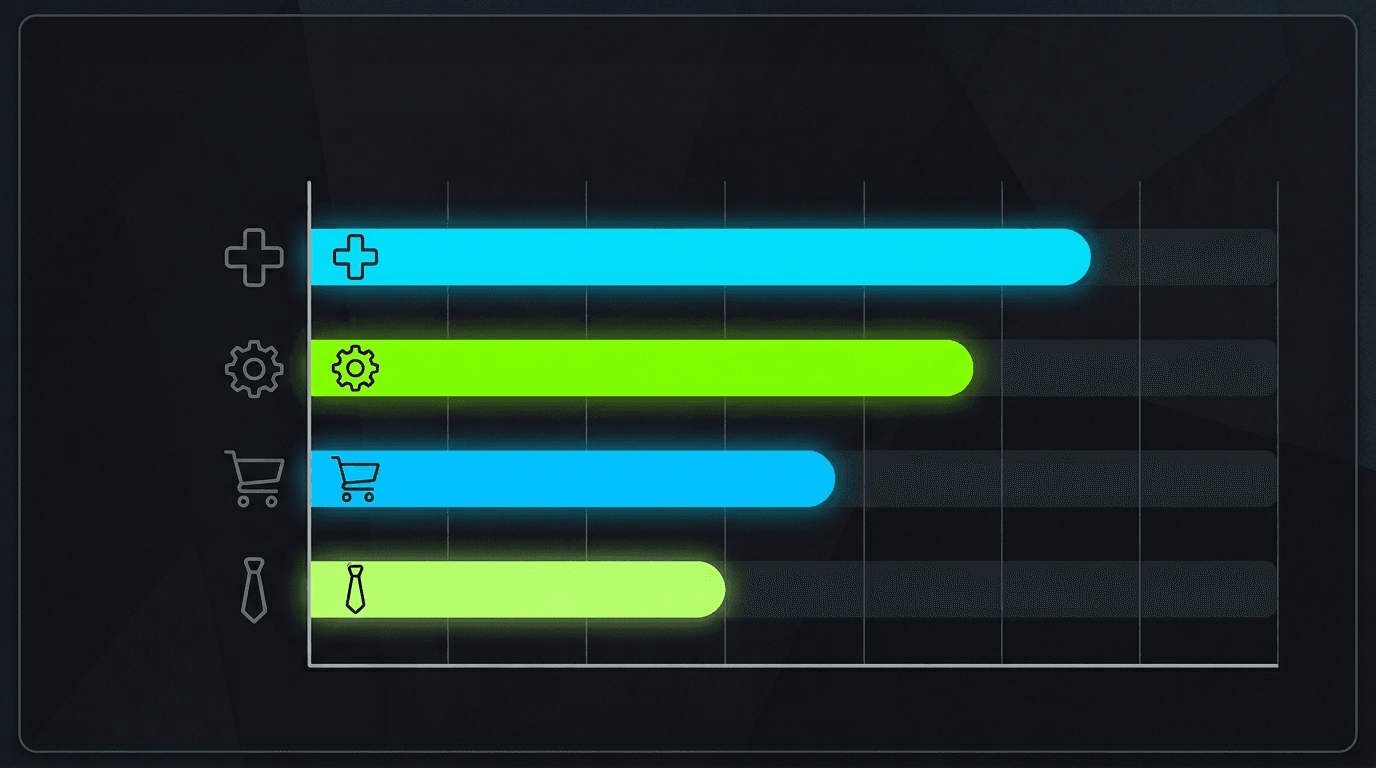
Professional services (law firms, accounting, consulting): These businesses typically save 15 to 25 hours per week by automating client intake, document drafting, scheduling, and follow-up emails. At $75 to $200 per hour, that translates to $56,000 to $250,000 in annual savings.
Healthcare practices: Scheduling, insurance verification, patient reminders, and records management eat up 10 to 20 staff hours per week. Automating these frees up front-desk staff to focus on patient experience instead of paperwork.
Retail and e-commerce: Inventory updates, order processing, customer service replies, and returns handling are prime automation targets. Most retailers save 12 to 18 hours per week and see fewer errors in order fulfillment.
Manufacturing: Quality inspection reporting, purchase order processing, and production scheduling represent the biggest wins. One mid-size manufacturer cut their reporting time from 8 hours per week to 45 minutes.
Across all industries, here is where the hours add up:
- Email and communication — 5 to 8 hours per week sorting, responding, and following up
- Reporting and dashboards — 3 to 5 hours per week pulling data and building reports
- Data entry and transfer — 4 to 8 hours per week moving information between systems
- Scheduling and coordination — 2 to 4 hours per week managing calendars and meetings
- Invoicing and bookkeeping — 2 to 4 hours per week on manual financial tasks
According to recent data, 44% of business owners say saving time is their number one goal when evaluating AI tools. Not cutting costs. Not replacing people. Just getting hours back in the day. That tracks with what we see: the businesses that get the most value from AI are not laying anyone off. They are redirecting their team from low-value busywork to high-value work that actually grows revenue.
The Hidden Costs of NOT Using AI
There is no “do nothing” option. Not adopting AI is itself a decision, and it comes with a price tag that gets bigger every month.
Start with the obvious math. If your team spends 20 hours per week on automatable tasks at $75 per hour, that is $75,000 per year you are paying for work a machine could handle. Every month you wait, you are writing a $6,250 check to keep doing things the slow way. Over three years of inaction, that adds up to $225,000 in labor costs you did not need to pay.
Then there is the competitive gap. Your competitors who adopt AI now will be able to respond to leads faster, process orders with fewer errors, and scale without hiring at the same rate. Within 12 to 18 months, the gap between businesses that use AI and those that do not will be visible in their margins, their speed, and their customer satisfaction scores.
The cost that no one talks about is employee burnout. When your best people spend half their week on data entry, copy-pasting between systems, and writing the same email for the hundredth time, they start looking for a different job. A recent survey found that 58% of employees say repetitive tasks make them less engaged at work. Replacing an employee costs 50% to 200% of their annual salary. AI does not just save money on tasks. It saves money on turnover.
The bottom line: every month you wait, you are paying the full cost of manual work while your competitors are paying a fraction of it. The question is not whether AI will save your business money. It is how much money you are going to leave on the table before you start.
5 Signs Your Business Is Ready for AI Automation
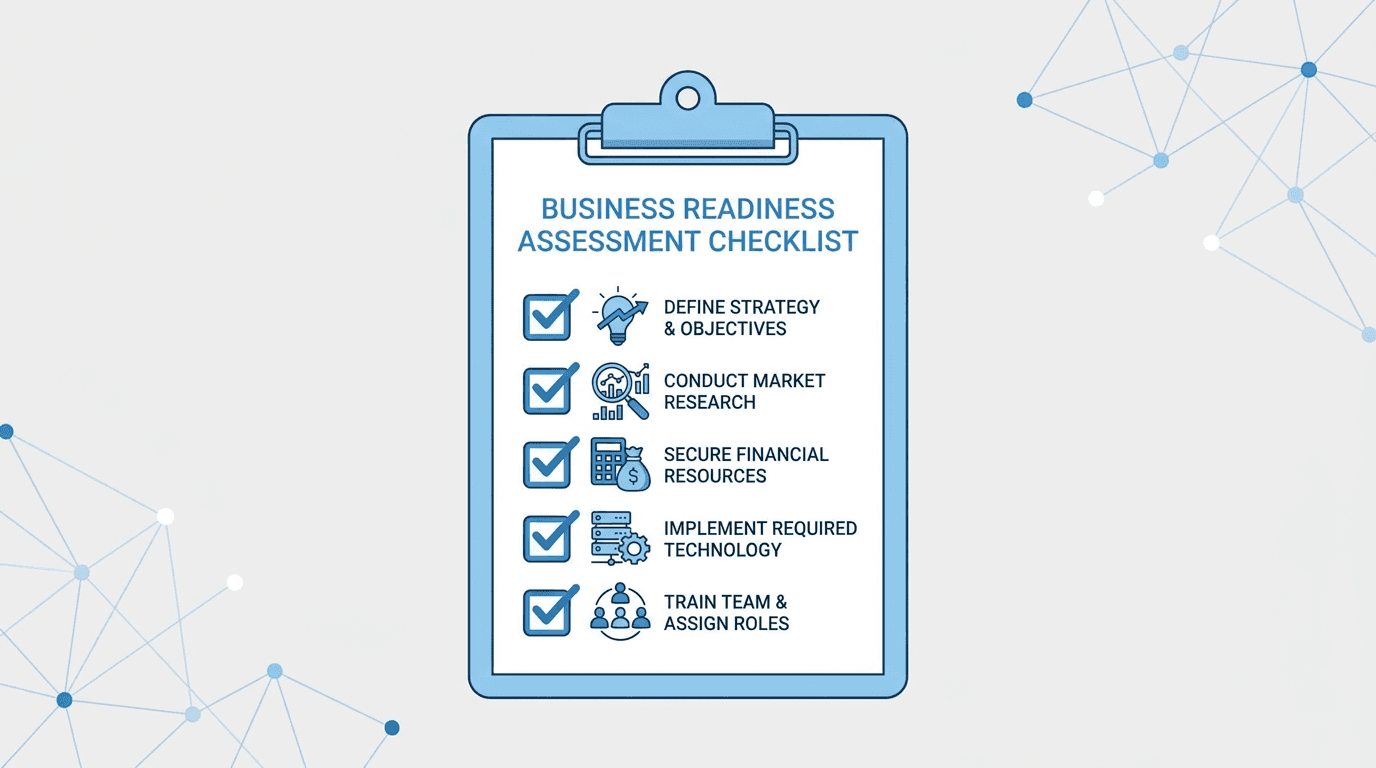
Not every business is ready for AI on day one. But most are closer than they think. Here are five signs that your business is a strong candidate right now.
Your team does the same tasks on repeat every week
If someone on your team could describe their Tuesday as “the same as last Tuesday,” that is an automation opportunity. Tasks like sending appointment reminders, updating spreadsheets, sorting incoming emails, or generating weekly reports are exactly the kind of predictable, rule-based work AI handles best.
You have more work than people and hiring is not the answer
You know you need more capacity, but adding headcount means recruiting, training, benefits, and management overhead. If a new hire would spend most of their time on repetitive tasks rather than strategic work, automation is a better investment.
Mistakes are costing you money or customers
Manual data entry leads to typos. Missed follow-ups lead to lost deals. Late invoices lead to cash flow problems. If human error in routine tasks is a regular headache, AI can eliminate most of those errors because it does not get tired, bored, or distracted at 4 PM on a Friday.
You already use digital tools but they do not talk to each other
You have a CRM, an email platform, an accounting tool, and a project management system. But someone still has to copy data between them manually. AI excels at connecting systems, syncing data, and eliminating the “copy-paste workflow” that eats up hours every week.
You want to grow without your costs growing at the same rate
This is the big one. If doubling your revenue currently means doubling your team size, your business model has a ceiling. AI lets you scale output without scaling headcount. A team of 5 with the right automation can produce the output of a team of 15.
Ready to See Exactly Where AI Fits?
The calculator above gives you a ballpark. To get a specific, actionable plan for your business, take the next step.
Have questions? Reach out directly at hello@oakenai.tech